Monte Carlo Simulations: Predicting Outcomes in Games of Chance
At first glance, casino games seem impossible to predict. Each spin, shuffle, or roll appears random. However, mathematics offers a powerful tool to analyze these systems: Monte Carlo simulations.
This method doesn’t try to predict a single outcome—instead, it simulates thousands or even millions of possible outcomes to reveal long-term patterns. These same principles can be applied when analyzing games on platforms like Amazon Slots and Netflix Casino.
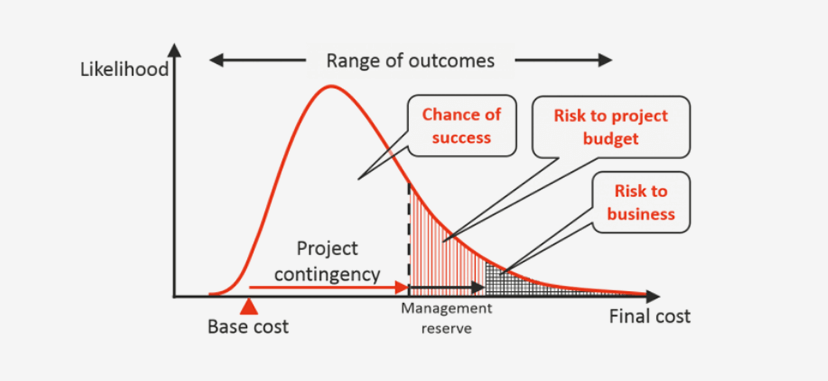
What Is a Monte Carlo Simulation?
A Monte Carlo simulation is a computational method that uses repeated random sampling to estimate probabilities and expected results.
Instead of solving a problem analytically, you simulate it many times and observe the outcomes.
In simple terms:
- Run the same game thousands of times
- Record the results
- Analyze averages and distributions
For example, if you simulate 100,000 roulette spins, you’ll see that results closely match theoretical probabilities.
A Simple Mathematical Example
Let’s simulate a basic roulette bet on red.
The probability of winning is:
$$P(\text{win}) = \frac{18}{37}$$If you simulate 10 spins, results may vary wildly. But if you simulate 100,000 spins, the average outcome will approach the expected value.
Monte Carlo simulation helps visualize this convergence toward statistical truth.
Why Simulations Matter in Casino Games
Casino games are governed by probability, but short-term results are highly unpredictable. Monte Carlo simulations help bridge that gap.
They allow you to:
- Estimate long-term outcomes
- Understand variance
- Compare strategies
For example, you could simulate:
- Different blackjack strategies
- Various betting systems in roulette
- Long-term RTP behavior in slot machines
Players often use these simulations before testing strategies in real environments like Netflix Casino.
Monte Carlo and Slot Machines
Slot machines are perfect candidates for Monte Carlo simulations because they rely on Random Number Generators (RNGs).
Since exact probabilities are hidden, simulations help approximate behavior over time.
For instance:
- Simulating 1,000,000 spins on a 96% RTP slot
- Observing average return approaching (96\%)
- Measuring volatility (big wins vs frequent small wins)
When playing on platforms like Amazon Slots App, these simulations can give you a realistic expectation of how a game behaves over thousands of spins—not just a lucky streak.
Strategy Testing with Simulations
One of the most powerful uses of Monte Carlo simulations is testing strategies.
For example:
- Does Martingale work in roulette?
- How does aggressive vs conservative blackjack play compare?
- What bankroll is needed to survive variance?
Simulations often reveal a key truth: most betting systems do not overcome the house edge.
Even if a strategy looks successful in the short term, large-scale simulations show that expected value remains negative.
This is why, even on platforms like Netflix Casino, no betting system can consistently beat the mathematical structure of the game.
Variance and Real-World Play
Monte Carlo simulations also highlight variance—the difference between short-term results and long-term expectations.
You might simulate:
- A player doubling their balance quickly
- Another losing everything in a short run
Both outcomes are possible, even if the long-term expectation is the same.
This explains why experiences on Amazon Slots can feel unpredictable, even though the underlying math is stable.
From Simulation to Reality
Many advanced players and analysts use Monte Carlo simulations alongside probability calculators.
The typical approach:
- Simulate thousands of outcomes
- Analyze expected returns and risks
- Apply insights in real gameplay
This creates a bridge between theory and practice, especially when testing ideas on platforms like Amazon Slots and Netflix Casino.
Final Thoughts
Monte Carlo simulations don’t predict exact outcomes—but they reveal the deeper structure of randomness.
By running large numbers of simulated trials, you can see how probability, variance, and house edge interact over time. This makes them one of the most powerful tools for understanding games of chance.
Whether you’re analyzing strategies or simply curious about how randomness behaves, simulations provide clarity in systems that otherwise seem unpredictable—both in theory and in real gameplay environments.